


[This post is part of our series, Engineering Practices in the Classroom, which explores what engineering practices are, why they matter, and what they look like in real classrooms.]
If you walked past this second-grade classroom and heard the lively conversation, you might not guess that it was part of a new STEM engineering lesson.
The teacher asks a simple question, “Think about when you go to sleep at night. Do you like the room to be very dark? Or do you prefer to sleep in a room with a lot of light?"
Hands go up.
“I like it SUPER dark in my room,” says Mateo. “I close the door and even a tiny light annoys me and I can’t sleep.”
“My brother sleeps with a big dinosaur nightlight,” adds Sofia. “I like some light, but it is way too bright.”
“I like the lights off so it’s kind of dark, but with maybe the hall light on,” says Jordan. “So in-between.”
Sofia nods. “Me too! That’s what I mean. SOME is good.”
“Interesting,” the teacher says. “It sounds like people have different preferences about light when they sleep.” Then she adds a new twist. “Imagine two kids sharing a room. One likes a lot of light. The other likes it dark. What would happen?”
“Ohhhhh they are gonna argue,” someone laughs.
“Maybe they can take turns? Like they can make that room really dark one night and leave on all the lights the next night and then flip back and forth,” another suggests.
The teacher nods. “What do you all think? Would that work?”
Some of the kids say yes, but others say that taking turns will lead to more fighting.
"Engineers often work on problems like this. Finding a solution that works for everyone can be tricky.”
She pulls up a picture from the story A Bright Idea, where Yazmin likes a bright nightlight but her visiting cousin Nasir prefers a darker room.
“Yazmin and Nasir had the same challenge,” she explains. “They needed a nightlight that would work for both of them.” The class reads the story together, encouraging students to think more deeply about who will use the nightlight they design.
This is a key engineering practice called considering problems in context. What could have been a simple exercise about how light travels through materials now carries more weight. Now the class is curious, connected, and eager to think more about solving this problem.
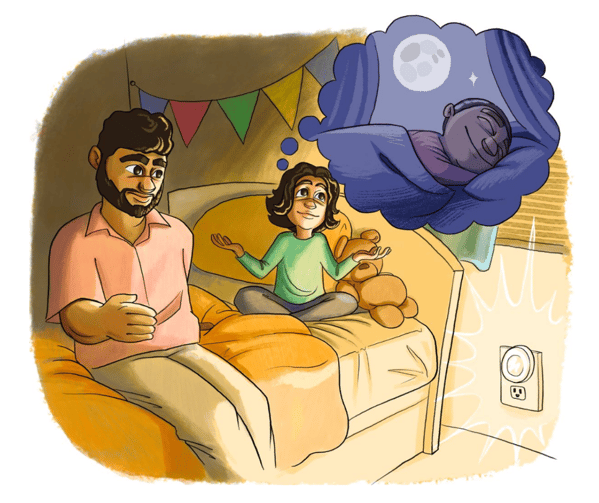 Illustrated stories like "A Bright Idea" help students imagine why their solutions matter.
Why establishing context matters
Class discussions like this can help expand a STEM challenge to include where and how their solution will be used. We want them to think about questions like Who is this solution for? Where will they be when they use it? Who might this system leave out? What do we need to understand about the current situation?
These are the same questions engineers ask every day as they create solutions for real people, in real places, with real constraints. For example, before a civil engineer can plan streetlights for a neighborhood, they need to study:
• How do people use this road now? Is this a main roadway with lots of traffic? Or a small side street with houses?
• Who requested the lights? What problem were they hoping to solve? Do drivers need help seeing a turn in the road or want to avoid hitting a deer at high speeds? Or were pedestrians hoping to feel safer walking their dog at night?
• What else is on the side of this road? Trees, buildings, and other obstacles might make it hard to install and maintain a light. If there are homes, people might be upset by bright lights shining into their bedrooms.
All of this information will help the engineer figure out how much light is needed, what kind of lights to recommend, and where they should be placed. The context shapes the solution.
Engineering is ultimately a human-centered process, requiring thoughtful consideration of the people who will use a solution.
The same is true in the classroom. Contextual framing can transform a design challenge from an abstract task into purposeful engineering. With a story of two cousins with different needs in mind, designing nightlights isn’t about making a decorative item. It’s a thoughtful project about helping kids with different needs when they are trying to sleep. Making a hand pollinator isn’t a craft project, it’s about creating a tool to help farmers grow food.
When students understand the human side of engineering, they engage with more curiosity, persistence, and care.
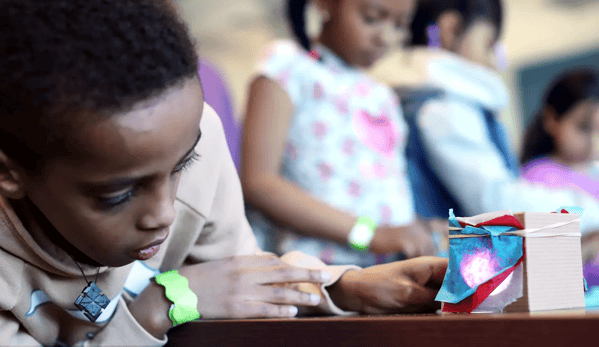
Students work hard to find a solution that works for both Yasmin and Nasir
Using stories to connect challenges to the world they know
Students engage most deeply with challenges that begin with narratives that tie directly to their own experiences, cultures, and surroundings. They also connect with specific characters rather than an abstract “end user.” We use age-appropriate narrative approaches to help anchor each STEM challenge within a social narrative. Here's how it works in the classroom for different grade levels...
PreK and Lower Elementary
For PreK learners, we use puppets, songs, and simple ideas to help set the problem in context. A friendly puppet will ask the class directly for help: “Hi engineers! I have a problem. Will you help me? My problem is that the floor is too hard to sleep on. When I try to sleep on the hard floor, I feel uncomfortable. Can you be engineers and figure out how to make a comfortable pillow for me to sleep on?”
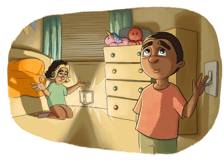 As kids reach Kindergarten – 2nd grade, they respond best to challenges they have personally encountered such as staying cool on a hot day, picking up trash or feeling scared of the dark. Teachers read a story with color illustrations to help students connect with characters who need to solve a problem.
Upper Elementary
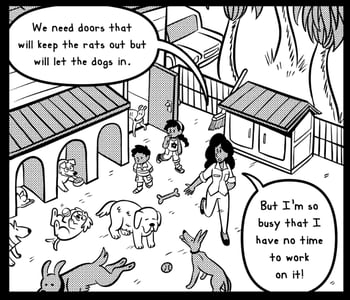
Upper elementary students begin to think more about their communities. Preventing
plastic pollution in ecosystems, building a magnetic door for an animal shelter, and finding novel ways to help people safely cross the street are terrific themes for this age group. At this stage, kids are reading independently, so we have found success using comic book-style stories.Middle School Students
Middle school students are ready to explore broader societal issues and systems, such as the global impact of fast fashion, needing to safely transport life-saving medicine, or making technology that helps people move through crowded cities. For this age group, the teacher sets the broader context and videos offer more real-world detail.This developmental layering builds empathy and expands students’ sense of agency. Engineering is ultimately a human-centered process, requiring thoughtful consideration of the people who will use a solution. The practice of setting problems in context is part of what makes engineering activities so meaningful for young learners.
Keep going
Ready to try it with your students?
Download the practice brief a free tip sheet for teachers about putting problems in context for students.Visit our Learning Library to view classroom videos of students situating problems in context
Follow YES on Social Media for insights and examples @yesatmos
Up next in the Engineering Practices in the Classroom series: Criteria and Constraints


