


[This post is part of our series, Engineering Practices in the Classroom, which explores what engineering practices are, why they matter, and what they look like in real classrooms. Today, we’re focusing on a foundational practice: using a structured process to solve problems.]
“Three, two, one – go!”
One by one, students drop their parachutes, counting seconds with a stopwatch as the different designs twist, fall quickly, or drift slowly to the ground.
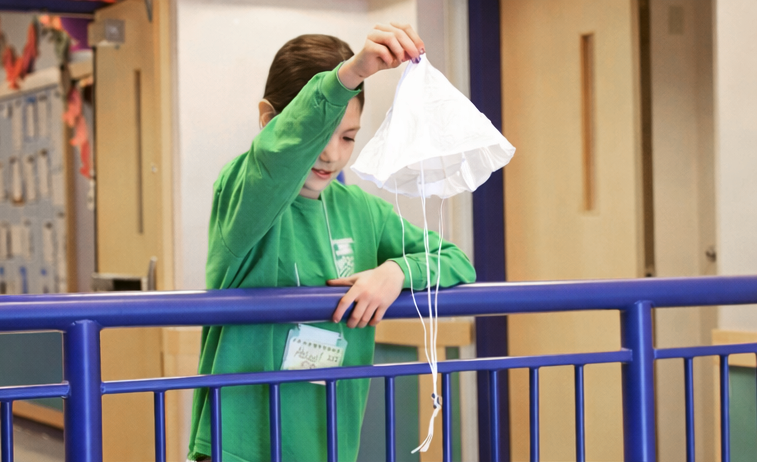 A young engineer prepares to launches his parachute design.
Back in the classroom, the work continues. With guidance from their teacher, students look at the data, talk through what they noticed, what worked, and what they want to do next to improve their solutions. Moments like these are more than hands-on building or regular group work; they’re steps of a foundational practice for engineers, the Engineering Design Process.
With support from their teacher, students test their designs, reflect on the results, and work together to decide what to change next. The structure of the process sparks productive conversations about failure and improvement, where critiques and questions are clearly about the design itself rather than the person who made it.
Why a structured design process changes the way students think and learn
Launching mini parachutes is always a fun STEM activity, but simply building and dropping a parachute isn’t what makes this an engineering activity. The difference between a simple project and deeper learning lies in what happens next: does the activity end with kids watching their parachutes drift (or plummet) to the ground? Or do they immediately start thinking about what happened and how they can improve their design? When students use a structured design process, they think in terms of iteration, automatically reflecting on their results and using evidence to guide decisions about what to try next.
Rather than jumping from idea to idea or giving up when something doesn’t work, engineers rely on a structured design process to help them consider criteria, explore possibilities, and improve their solutions over time. This practice helps engineers avoid overlooking key constraints and ideas or locking in on one idea too quickly.
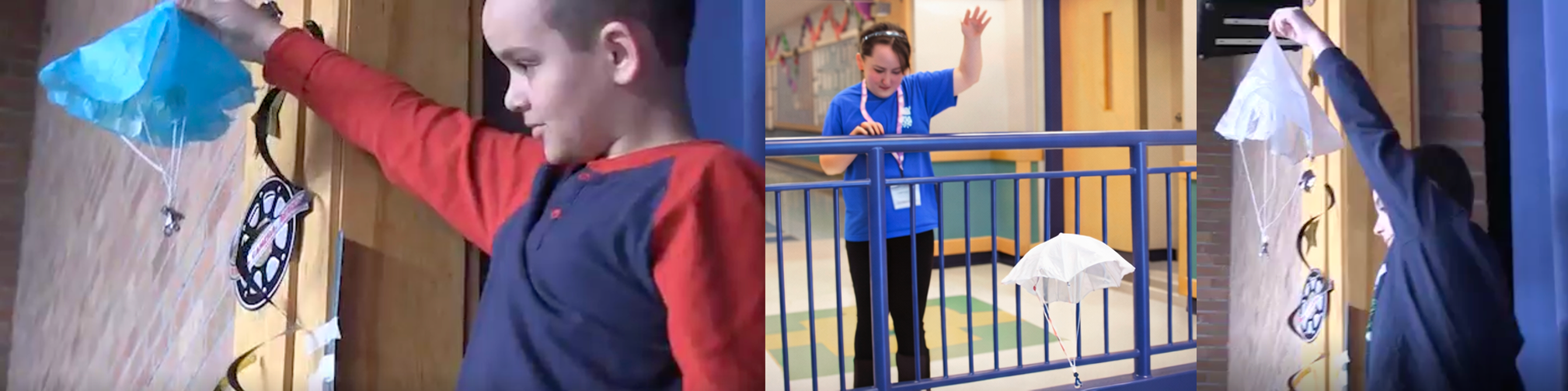
Students test different designs and observe how design changes affect performance.
They gather evidence to guide decisions about improvement.
A Structured Process Invites Curiosity and Creative Thinking
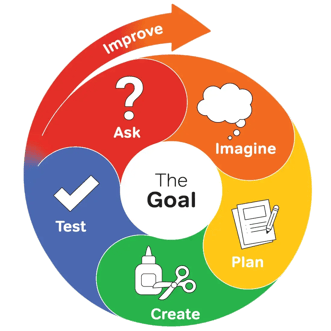 While working on their parachutes, these students used a shared Engineering Design Process: Ask, Imagine, Plan, Create, Test, and then students improve by engaging in the cycle again.
The specific labels and numbered phases may vary, but the underlying practice remains the same. A structured process helps students organize their thinking, decide what to focus on next, and keep moving forward as they test and revise ideas.
A shared engineering design process gives students a common approach as well as a shared vocabulary for thinking through complex problems. It also offers a clear pathway for what to do next—especially something doesn’t work as planned.
They know the steps,
focus on what’s next, and keep going.
Importantly, this process also does not limit the students’ creativity or impose a lockstep linear structure. Instead, students often experience more freedom when they don’t feel mired in high-level decision making. They know the steps, focus on what’s next, and keep going. And like professional engineers, students move back and forth between phases, revisiting earlier ideas as they learn more.
This cyclical approach mirrors real-world engineering and helps students see that problem solving isn’t about getting the perfect answer right away. It’s about testing, learning, and improving.
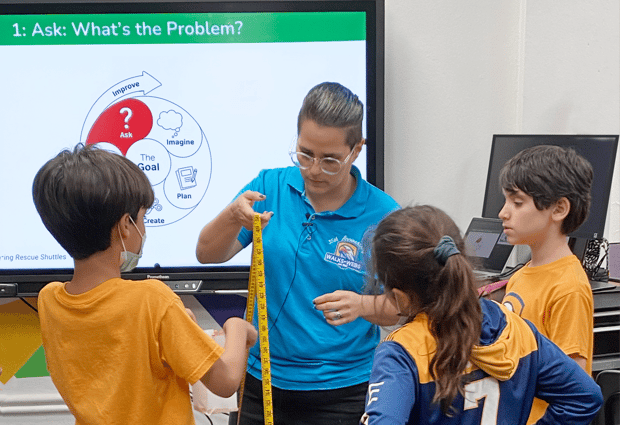 The drop test is part of an iterative process, not the end. Back in the classroom,
students ask new questions based on what they learned from testing.
A Structured Process in Action: What Teachers Can Notice and Name
When students use a structured problem-solving process, the most important learning often shows up in their words and decisions. Here are a few behaviors to watch for and name in your classroom:
• Students referring back to earlier phases in the process (“Wait, remember what happened when we tried a sponge at the beginning?”)
• Students explaining why they want to change part of a design (“I think we need to make the parachute bigger and more stiff so the wind can catch it.”)
• Students using shared terminology like prototype, test, and improve
• Students sounding eager to keep going when a design fails (“Okay, that didn't work. Now I'm thinking we should try…”)
These are perfect opportunities to pause and make the practice visible. This in-the-moment naming reinforces that persistence and revision are expected parts of the process, helps them connect their actions to how engineers think and work. A simple prompt like “You’re thinking like an engineer. What’s the next step?” helps solidify the process in students’ minds.
You can also refer to the process outside of STEM activities. Once you start noticing, you’ll see kids using those five core steps—Ask, Imagine, Plan, Create, Test—for all kinds of moments in other subjects. Whether they are wrestling with a multi-step math problem or planning, writing, and revising an essay, knowing a structured problem-solving process helps students work through frustration. Instead of feeling stuck, they move on to the next phase of the process, figure out a way to improve, and try again.
Building Habits That Last
Using a structured problem-solving process helps students organize their thinking, make sense of failure, and take on new challenges with confidence. Over time, this practice supports skills like critical thinking, collaboration, and persistence—habits that extend far beyond a STEM activity to help them succeed.
Ready to try it with your students? Here are a few next steps you can take...
-
Download the tip sheet. This free resource includes concrete implementation suggestions.
-
Visit our Learning Library. Watch videos of students engaging in each phase of the Engineering Design Process.
-
Follow YES on social media for more ideas and engineering practices. @yesatmos
Up next in the Engineering Practices in the Classroom series: Considering problems in context


