

Go to the YES Blog homepage

EiE Research Results | Tuesday, April 12

Sneak Preview: Three EiE Research Papers for NARST 2016

Later this week, educational researchers from around the world will gather in Baltimore . . . not for the famous crab cakes (though those are certainly an attraction), but for a major conference on science teaching and learning. Three presentations will feature the latest research on the Engineering is Elementary curriculum.

This meeting, held April 14–17, is the 2016 Annual International Conference of NARST, a professional organization formerly known as the National Association for Research in Science Teaching. This year the conference theme is “Equity and Justice: Many Different Voices, Cultures, and Languages in Science Education Research for Quality Science Learning and Teaching.”

Out-of-School time | EiE Teaching Tips | Thursday, April 5

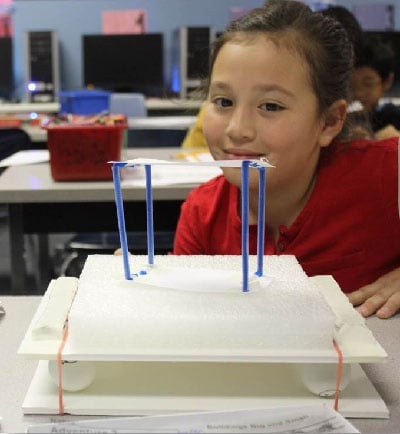
Teacher Tip: Simulate an Earthquake with Easy-to-Make “Shake Table”

This engineering teacher tip is for educators who use Engineering Adventures, our curriculum for learners in grades 3-5 in out-of-school settings like afterschool and camp—specifically the unit Shake Things Up: Engineering Earthquake-Resistant Buildings. This unit introduces kids to the devastating earthquake that hit Haiti in 2010; the challenge is to engineer a model building that can withstand a quake.

Implementing EiE | Tuesday, April 5

10 Million Served!

10 million of anything is a lot, and a landmark to celebrate. This past year, for example, Chevrolet turned out its 10 millionth Malibu, New York’s CitiBikes celebrated 10 million rides, and Apple Music hit 10 million subscribers. Here at Engineering is Elementary, we’re celebrating a really meaningful landmark. Our award-winning curriculum has reached 10 million students!

Engineering Habits of Mind | Thursday, March 31

Join EiE at #NSTA2016 to Learn About "Engineering Habits of Mind"

Today’s guest blogger is Dr. Christine M. Cunningham, founder and director of Engineering is Elementary.

Not long ago, engineering was an academic subject mainly reserved for college students. But as states put new science standards in place, many elementary teachers face the expectation that their students must learn engineering concepts and skills. Can you really teach engineering to very young students? I’ve been working in the field of K-12 engineering for more than a decade; based on my own research and that of others, the answer is a resounding yes.  I’ll be talking about this today at 3:30 at the NSTA National Conference on Science Education in Nashville (Davidson A1, Music City Center). Here’s a sneak preview of my presentation.

Early Childhood STEM Education | Tuesday, April 18

Heeding the Call to Support Early STEM

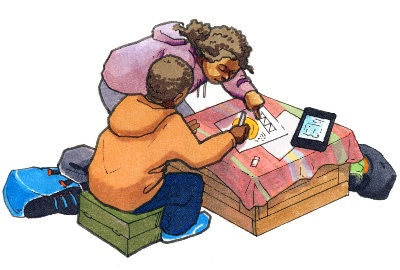
Designers at work! Our development team has started work on a new PreK-K curriculum.

In 2009, President Obama launched “Educate to Innovate,” a campaign to improve K-12 STEM education. Then, in 2013, he advocated for high-quality preschool for every child. Now these initiatives are connecting: earlier this month, the White House put out a call to support America’s youngest students with early STEM education.

The Engineering is Elementary project is already on board. This winter, we started work on a PreK-K engineering curriculum for ages 3–5 that is modeled after our award-winning EiE curriculum for ages 6–10. The three-year, $425,000 PreK-K initiative is funded by entirely by the EiE project at the Museum of Science, Boston.

All posts

Current page: 90

Subscribe to Email Updates

Posts by Topic

see all