

The EiE Professional Development Team works tirelessly to find innovative ways to make high-quality, affordable professional development accessible to educators all over the world. That’s why we’ve been so excited to roll out our new Online PD experiences. Over the past year, we’ve conducted webinars about habits of mind and engineering in out-of-school time, and we’ve had some amazing discussions with educators around the country about STEM integration and ELA connections. In March, we mentioned our brand new Online PD Scholarship on the blog, and we were blown away by the response! From the huge volume of applications, the Online PD team has pulled together an amazing team of dedicated educators to help us pilot test the very first online PD workshop series.

Scholarships and Awards | Thursday, June 8
Meet Our First Online PD Scholarship Winners!
Tuesday, June 6
Share Your #EiEDesigns With Us!
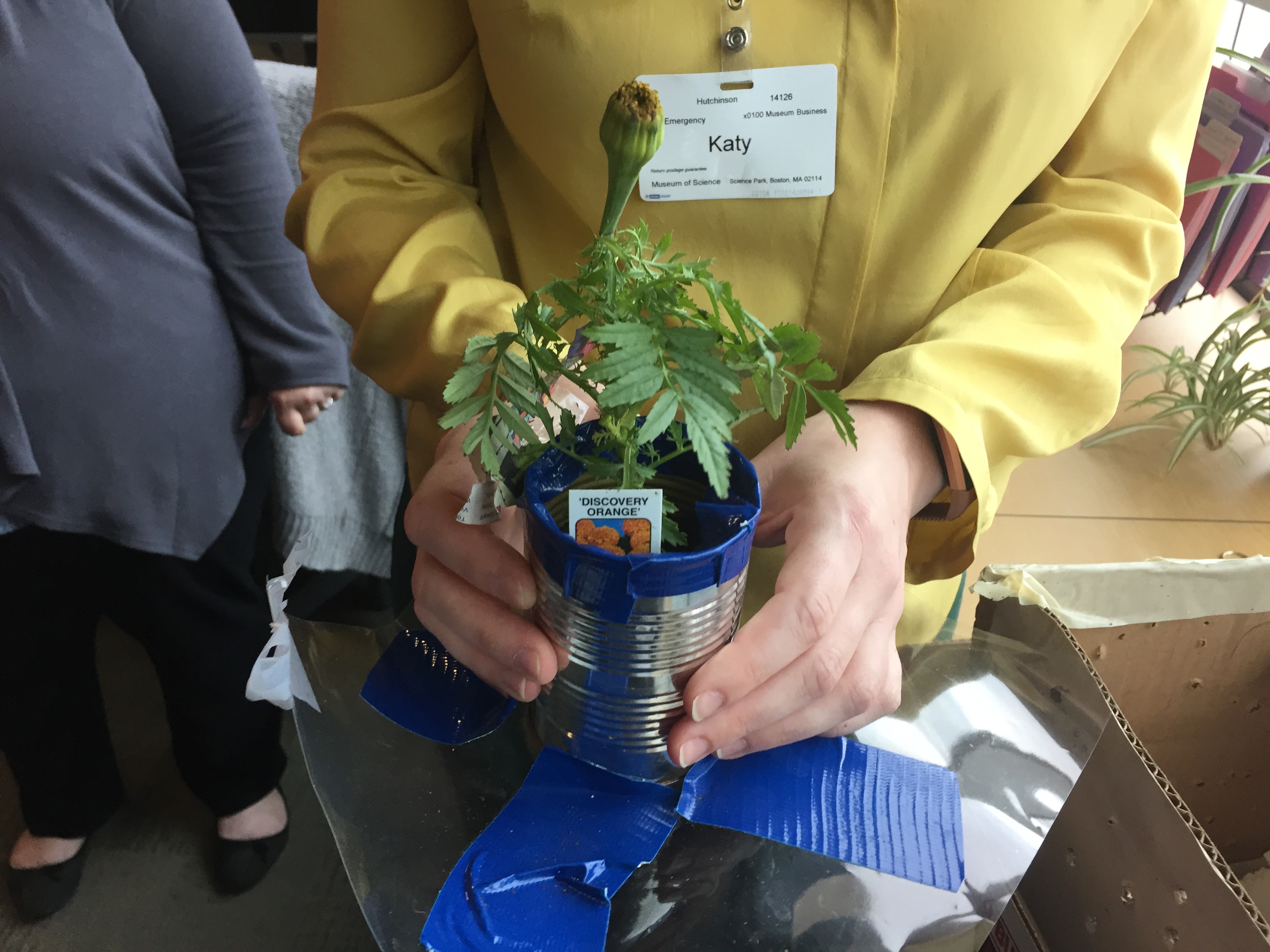
The EiE team works hard every day to produce curricula that will engage young learners and get them excited about engineering. We know that over 13 million children have engaged in EiE, and sometimes, we’re lucky enough to see their designs! We love when teachers find us on Twitter or Facebook, or email us to share their students’ creations with us. Today, we want to invite you to use our new hashtag for sharing student work—#EiEDesigns. And to celebrate, we’re spotlighting an EiE design that got the whole team excited: a very well-engineered plant package sent to us from an enterprising first-grade class!
Engineering Habits of Mind | Thursday, May 25
Beyond Memorization: Engineering Helps Kids See the Big Picture
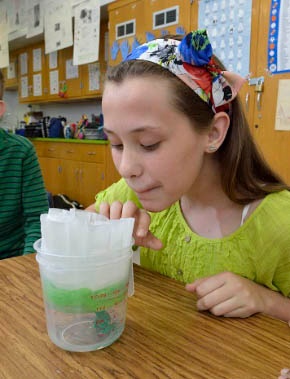
The students in Jean Facchiano's fourth-grade class have spent the morning engineering their own models of permeable membranes, using ordinary kitchen supplies like sponges, coffee filters, and perforated aluminum foil. The goal is to design a system that lets water drip into a frog habitat, keeping the container slightly damp, not dry or flooded.
Each group of students has come up with their own unique system for controlling water flow into the habitat. Now, in the video below, the students present their results. It's not just a show-and-tell; it's a concise demonstration of elementary students starting to apply their systems-thinking skills.
EiE Teaching Tips | Tuesday, May 23
"Can I Just Teach Lesson 4?" The Power of Scaffolded STEM Learning
Elementary teachers are under tremendous time pressure, especially with the current emphasis on preparing for standardized tests. Working through the four lessons in an Engineering is Elementary unit takes about six to ten hours of class time. When I facilitate EiE workshops, teachers often ask me: “Do I HAVE to teach all four lessons? What if I just skip to Lesson 4?" . . . which is the engineering design challenge, where kids design, build, and test a technology, such as a solar oven or water filter.
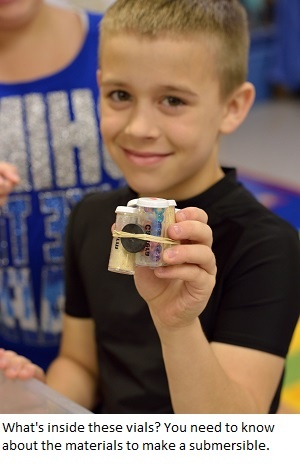
In our Teacher Educator Institutes, we ask participants to skip to Lesson 4 deliberately, as a learning experience. I recall one workshop where we started with Lesson 4 from our “Designing Submersibles” unit; the challenge is to make a model submersible from small plastic vials that contain sand, beads, or marbles.

Thursday, May 18
We Want To Hear From You!
We’re looking for feedback from everyone who reads our blog or newsletter—that means you! If you fill out the short form (it should take no more than 10 minutes) below, you’ll automatically be entered to win the EiE teacher guide of your choice. You can view the full selection of EiE units here. Your feedback is extremely valuable to us and will help us produce the content that you are most interested in. This survey will close at 5 PM EDT on Thursday, June 1, 2017.
If you haven't already, be sure to subscribe to our monthly newsletter.